Search Results
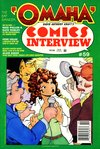
Comics Interview — Issue #059 (June 1988)
interview
Gene Colan
Colan recounts his career beginning at Fiction House in 1944, his years at Timely/Atlas under Stan Lee, his use of the alias "Adam Austin" for early Marvel work to avoid issues with DC, and his definitive runs on Daredevil, Sub-Mariner, Doctor Strang...
Show more
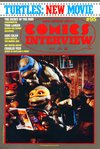
Comics Interview — Issue #095 (June 1991)
interview
Gene Colan
Part one of a career retrospective covering Colan's early freelance work at Quality Comics, DC, and EC through the early Marvel Age, including Hopalong Cassidy, Ben Casey, war stories for Warren/Archie Goodwin, and the landmark "Marvel method" wi...
Show more
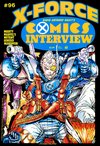
Comics Interview — Issue #096 (July 1991)
interview
Gene Colan
Part two of Colan's career retrospective focuses on his relationships with inkers, naming Tom Palmer as his best collaborator, and also praising Frank Giacoia, George Klein, and Syd Shores. Colan explains his preference for working at one-and-a-half-...
Show more
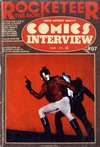
Comics Interview — Issue #097 (August 1991)
interview
Gene Colan & Adrienne Colan
...s briefly interviewed about her background in the arts and her role in encouraging Gene's career when he was forced out of comics and working below his abilities.
Show more
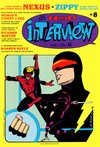
Comics Interview — Issue #008 (February 1984)
interview
Tom Ziuko
...ithout color shifts, a breakthrough he pioneered on Thriller and refined for Gene Colan's pencil-only Nathaniel Dusk, where the unprecedented challenge of coloring unlinked pencil art required ultra-delicate handling. Also discusses his colorist ...
Show more
Comics Interview — Issue #036 (July 1986)
article
Letters: The Last Word
...r in the upcoming Batman film and suggest future interview subjects (Kirby, Ditko, Gene Colan).
Show more

Comics Interview — Issue #063 (October 1988)
article
Letters: Last Word
A reader praises the previous issue's Gene Colan interview, expressing particular fondness for Colan's Iron Man work in Tales of Suspense and wishing the interview had been longer and more in-depth.
Show more
Comics Interview — Issue #066 (January 1989)
interview
Roy Thomas
...ailed anecdotes about working relationships with Stan Lee, Jack Kirby, Neal Adams, Gene Colan, and Bill Everett. Thomas reflects on his love of historical fiction and Golden Age characters, and his ongoing interest in World War II settings.
Show more
Comics Interview — Issue #115 (February 1993)
interview
David Mazzucchelli
...his collaborative working relationship with Frank Miller, his artistic influences (Gene Colan, Kirby, Roy Crane), a nine-month stay in Italy that shaped his graphic sensibility, and his decision to self-publish the anthology series Rubber Blanket.
Show more
Comics Interview — Issue #135 (June 1994)
interview
Dan Adkins
...lver Surfer, Sub-Mariner, and other titles alongside John Buscema, Jack Kirby, and Gene Colan. Adkins also recalls mentoring a string of future professionals — Craig Russell, Val Mayerik, Paul Gulacy, and Jerry Bingham — and expresses his desire to r...
Show more
Comics Interview — Issue #147 (April 1995)
interview
Don McGregor
...Warren work, his Eclipse prose books (*Dragonflame*, The Variable Syndrome), his Gene Colan stories from Nathaniel Dusk and Ragamuffins and Panther's Quest, and his ambitions for future projects including Sabre: The Decadence Indoctrination...
Show more
Comics Interview — Issue #059 (June 1988)
interview
Reed Waller & Kate Worley
Waller traces the origins of Omaha the Cat Dancer from erotic funny-animal strips in the amateur press association VOOTIE (launched 1976), through publication in Bizarre Sex #9 and subsequent issues from Kitchen Sink Press. Worley explains how she ca...
Show more
Comics Interview — Issue #059 (June 1988)
interview
Alain Baran
Baran, director of Fondation Herge and a personal acquaintance of Herge since childhood, explains why no new Tintin books will be produced after Herge's death per the creator's own wishes, and how Studio Herge has been dissolved and replaced by the f...
Show more
Comics Interview — Issue #059 (June 1988)
interview
Linda Stanley
Stanley, a printing sales representative at Sleepeck Printing in Chicago, explains the heat-set web offset printing process used for comic books, from paper stock choices (Dixon #101, Britewight, Baxter) to four-color dot printing, folding, perforati...
Show more
Comics Interview — Issue #059 (June 1988)
article
Up Front (Henry Vogel, guest editorial)
Vogel warns about the danger of expanded RICO laws that now include pornography without any legal definition of the term, arguing the government has effectively granted itself power to destroy any business selling potentially objectionable printed ma...
Show more
Comics Interview — Issue #059 (June 1988)
article
The Last Word (Letters)
Dean Mullaney of Eclipse Comics corrects a claim from issue #55 that Pacific Comics was the first to offer creator ownership, asserting Eclipse has had that policy since 1978 and noting earlier precedents. Brian Bolland issues a stolen art alert for ...
Show more
Comics Interview — Issue #097 (August 1991)
interview
Dave Stevens
Stevens discusses his role as co-producer on Disney's *The Rocketeer* film, covering the seven-year development process, the choice of director Joe Johnston, and the faithfulness of the adaptation to his original comic. He also talks extensively abou...
Show more
Comics Interview — Issue #097 (August 1991)
article
"Up Front: DAK Goes Bats" (David Anthony Kraft)
Editorial musing on the upcoming Batman II film and the Rocketeer movie, speculating whether Warner Bros. might adapt *The Dark Knight* as a bold sequel.
Show more
Comics Interview — Issue #097 (August 1991)
article
Letters: The Last Word
Features a note from Neal Adams correcting a misconception in a prior Tom Lyle interview about Robin's hair design; a sharp letter from Kim Thompson (Fantagraphics) criticizing DAK's editorial rebuttal of Chester Brown's dismissal of superhero comics...
Show more